
Explained by Dr Abhilash
Dental implants
Can Food Decide the Success of Your Dental Implant?
Why Dental Implants Are Chosen Today
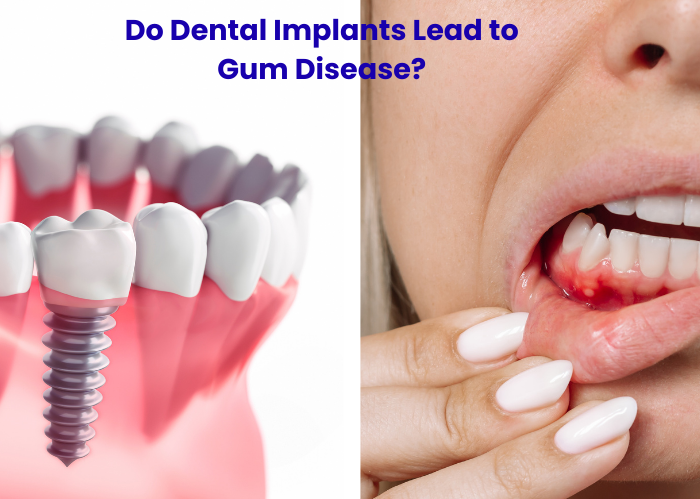
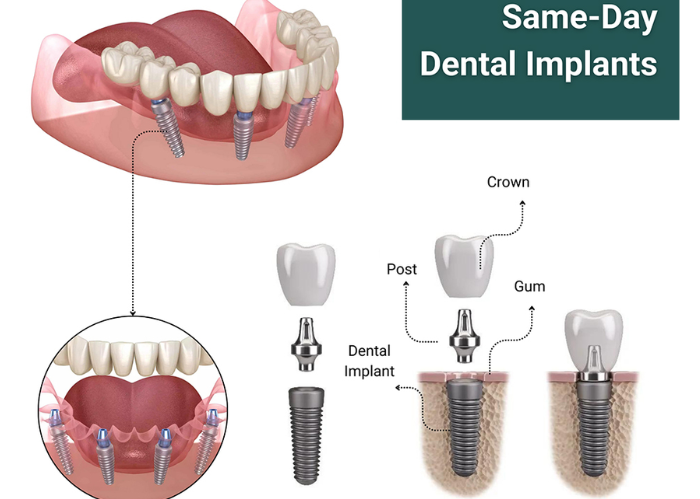
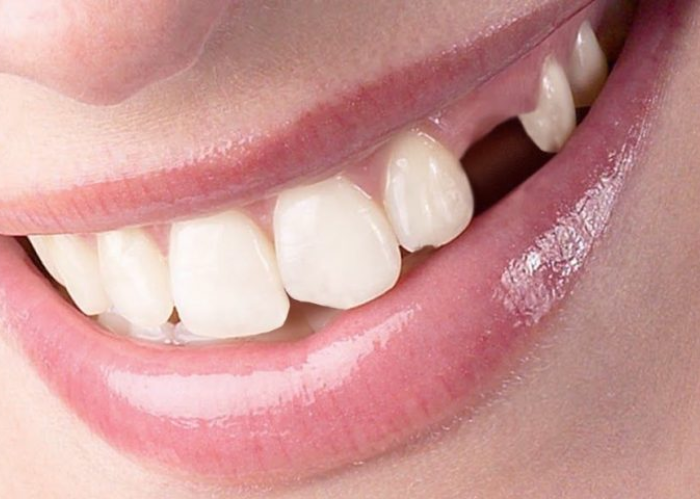
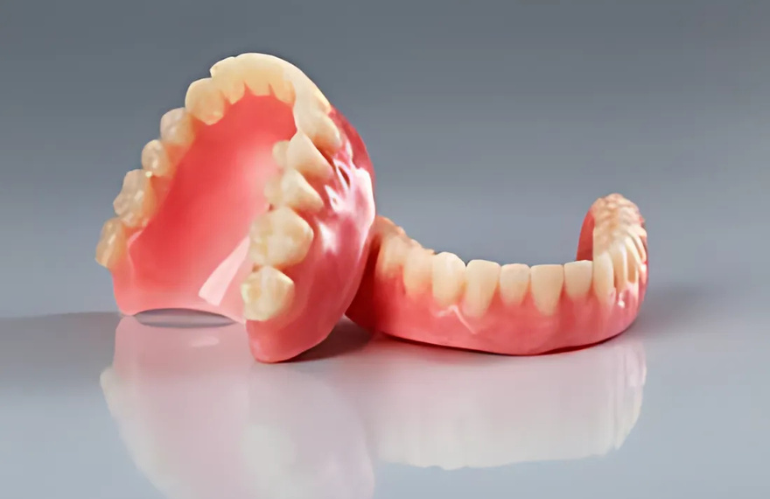
Dental implants are used when a missing tooth starts affecting daily life. Chewing becomes difficult, nearby teeth shift, facial support reduces, and confidence drops. An implant works as an artificial tooth root placed inside the jawbone, with a crown fixed on top. It restores function and appearance almost like a natural tooth. Depending on the need, implants can replace a single tooth, multiple teeth, or an entire set of teeth using full-mouth implant techniques such as All-on-4 or All-on-6. In carefully selected cases, implants can even be placed immediately after tooth removal.
Who Can Safely Get Dental Implants
Implants are generally safe once jaw growth is complete, usually after 18 years of age. There is no upper age limit. What matters is bone quality and overall health. Common medical conditions like diabetes or high blood pressure do not automatically rule out implants. When these conditions are well controlled, implant treatment can be done safely. If sugar levels are high or bone quality is weak, dentists manage this with better medical control, bone grafting, or a slower, staged treatment plan. The key factor is stability, not age or diagnosis.
What the Implant Treatment Involves
The implant journey begins with a detailed clinical examination and imaging such as CBCT scans or X-rays to evaluate bone strength. The surgical placement of the implant usually takes about 30 to 60 minutes. After placement, the implant needs time to bond with the jawbone through a natural process called osseointegration. This healing phase generally takes three to six months. Once the implant is stable, a permanent crown is fixed. In India, dental implant treatment usually starts from around ₹25,000 per implant, with the final cost depending on the implant system used, bone procedures required, and crown material selected.
How Food Influences Implant Healing
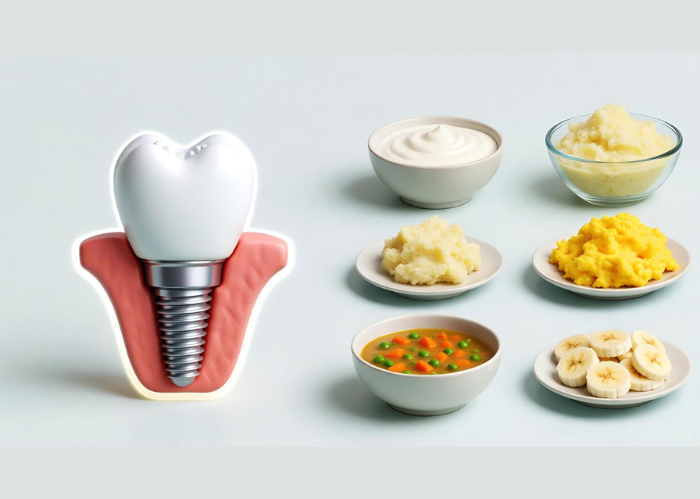
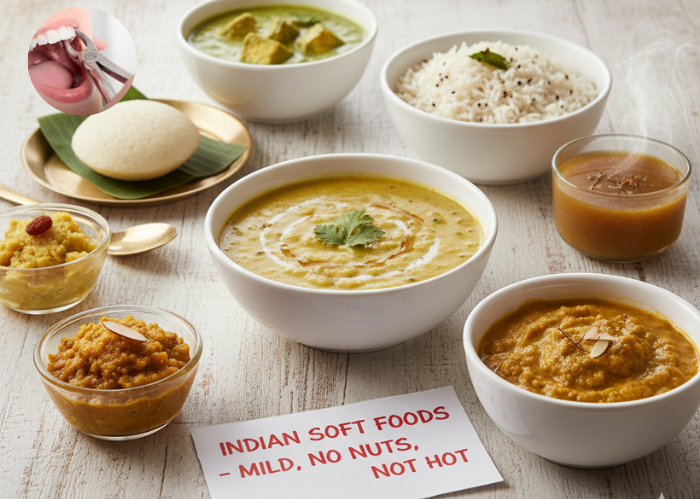
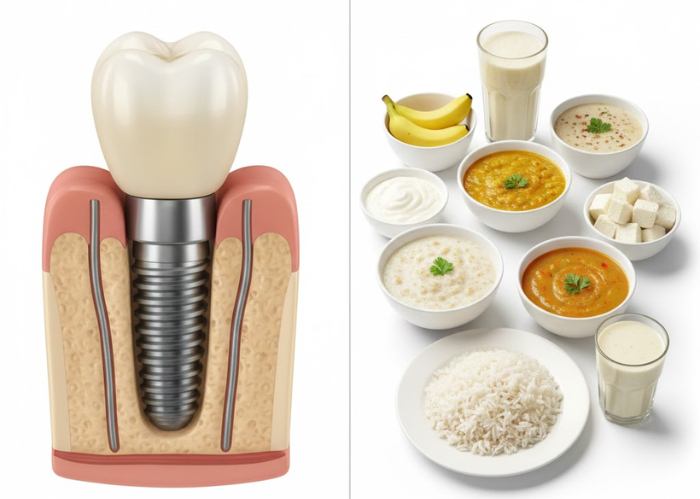
Food plays a direct role in how well an implant heals. In the early weeks, the bone and gums around the implant are delicate. Excess chewing force, heat, or inflammation can disturb the implant before it integrates with the bone. Soft, nutrient-rich foods reduce stress on the implant while supplying the body with protein, calcium, and vitamins needed for healing. Smoothies made with banana, papaya, chikoo, milk, or curd are easy to consume. Warm soups, dal water, soft scrambled eggs, plain mashed potatoes, steamed bone-free fish, curd, soft paneer, buttermilk, rice kanji, ragi malt, oats porridge, and soft rice with dal or khichdi are ideal during the recovery phase.
Foods That Can Delay or Damage Healing
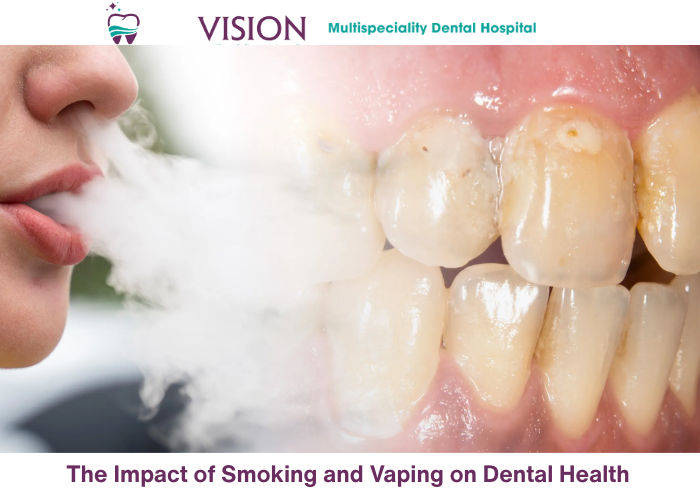
Certain foods can interfere with implant stability if taken too early. Crunchy foods like chips and nuts can cause implant movement. Hard foods increase pressure on healing bones. Sticky foods may disturb the crown area. Spicy foods irritate healing gums and increase inflammation. Very hot foods raise swelling levels. Alcohol and excess caffeine slow down tissue repair. Many early implant failures are linked to poor food discipline rather than surgical issues.
The Final Outcome Depends on Recovery Discipline
A dental implant does not fail overnight. Failure usually happens slowly when healing is repeatedly disturbed during the early phase. Surgery places the implant, but recovery protects it. Following food guidelines, managing medical conditions, and attending follow-up visits are what ensure long-term success.
For expert implant care and structured aftercare guidance, consult Dr. Abhilash
You can book an appointment by calling +91 93914 57072 or visit in person at Ngo’s Colony Main Road, Corner, 5th Line, opposite Prudhvi Pristine, Venkata Ramana Colony, Guntur.
A successful implant is not just placed.
It is carefully healed and maintained